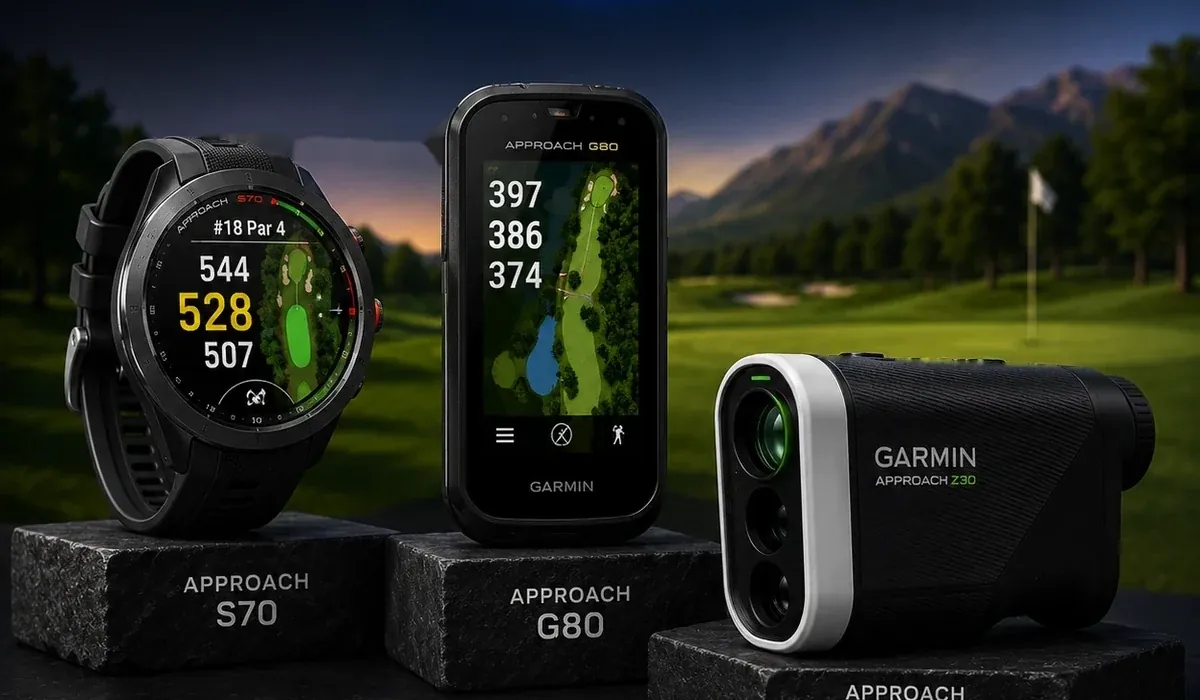
GPS device
Best for: planning the hole and seeing distances to greens, hazards and lay-up points, including targets you cannot see from where you are standing.
Some links on this page are affiliate links. We may earn a commission if you buy, at no extra cost to you. How this works.
Golf Gear Lab direct answer
Choose GPS if you want hole strategy, hazards and front-middle-back green distances at a glance. Choose a laser rangefinder if your priority is the exact distance to the flag or another visible target. For regular golfers who value both course management and precise approach yardage, the two devices complement each other.
GPS is better for planning the hole. A rangefinder is better for exact approach-shot yardage. Many golfers eventually use both.
Best for: planning the hole and seeing distances to greens, hazards and lay-up points, including targets you cannot see from where you are standing.
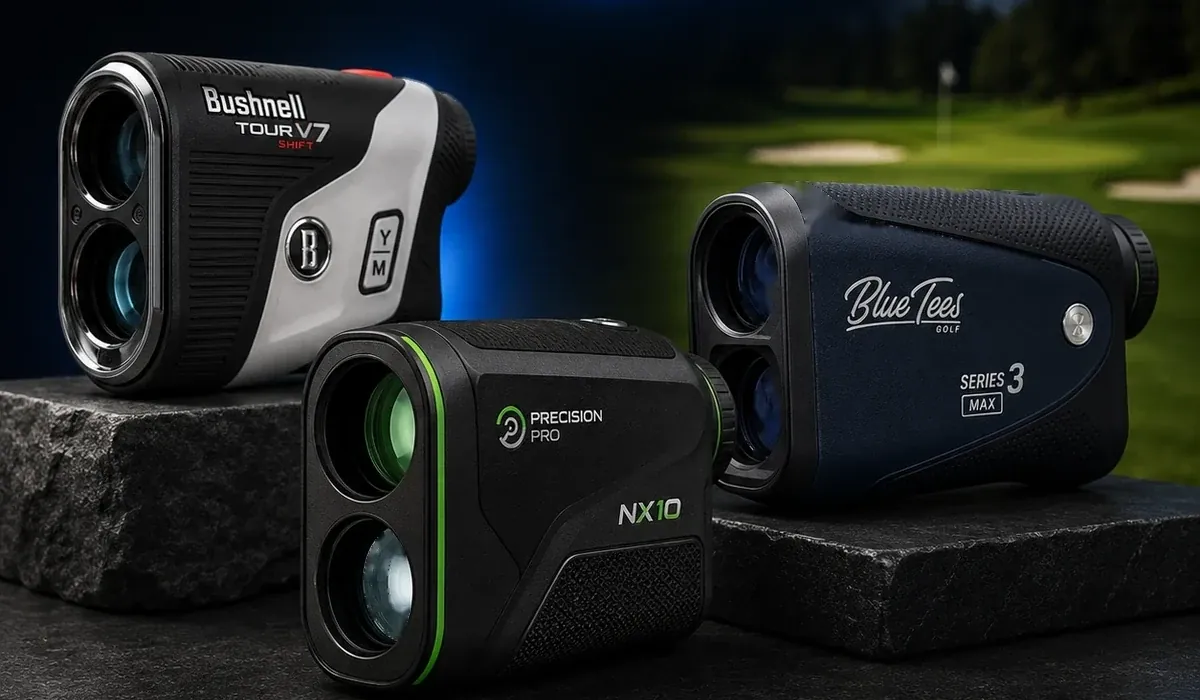
Best for: getting a precise line-of-sight distance to the flag, bunker face, tree or another visible target immediately before a shot.
| Buying question | GPS | Rangefinder |
|---|---|---|
| What does it tell you? | Mapped distances and hole context | Exact distance to a visible target |
| Works on blind shots? | Yes, if the target is mapped | No, it needs line of sight |
| Best strength | Strategy and course management | Precise approach yardage |
| Main compromise | Mapped point is not the exact flag position | Little information about unseen hazards or hole shape |
| Best simple choice | Golfers wanting useful information at a glance | Golfers mainly wanting flag distance |
Choose GPS if you regularly make decisions about carries, lay-ups and unfamiliar hole shapes. Choose a laser if your main question is simply “how far is the flag?” If you play often and value both strategy and precise approach numbers, the two devices complement each other rather than duplicate each other.
Practical buying decision
Neither format is universally better. The right choice depends on whether you need broad course information at a glance or precise distance to a target you can see. Think about the device that will simplify real decisions during a normal round.
You want front, middle and back green distances, hazard context and useful information when the flag or landing area is not visible.
You want an exact line-of-sight measurement to the flag or another visible target and prefer a device without course downloads.
You value GPS for strategy and a laser for final club selection. Many regular golfers find the two tools complementary rather than competitive.
Consider display readability, battery routine, slope legality, course coverage, app or subscription requirements and how quickly the device fits your pre-shot routine.
The comparison above covers the main differences. Use these checks on your own room, round and budget before ordering.
| Decision factor | What Golf Gear Lab checks |
|---|---|
| Distance experience | Compare optics, display clarity, target acquisition and confirmation. |
| Slope & GPS | Separate genuinely useful course information from features you may rarely use. |
| Competition use | Check that prohibited assistance can be disabled where required. |
| Handling | Consider size, weight, grip, case and speed of use on the course. |
| Battery & weather | Check power method and weather protection for regular play. |
| Value | Decide whether premium optics or connected features justify the extra spend. |
We compare the products against the buying decision on this page, including their intended use, practical setup, ownership costs, current market position and the specifications that can materially change the choice. We cross-check manufacturer claims against independent published testing and practical owner experience where useful, and distinguish published specifications from independently observed findings.