GGL Scores and attributed testing summaries come from our existing research library. Some original value judgments reflect the source market. Confirm the exact US model, licence, availability and warranty before choosing.
Buying guide · Electric trolleys
Best Electric Golf Trolleys 2026
By Golf Gear Lab · Source research updated 1 October 2026
Compare powered golf carts—often called electric trolleys—by folded size, battery options, controls and remote operation. Check the exact US variant, local service support and your course’s walking policies.
The best trolley depends on your car trunk, your course and how you walk it. Decide whether you need remote control or GPS first, because each adds several hundred pounds and several kilos. Then compare folded size, battery and warranty.
Why the M1 when the PowaKaddy FX3 is cheaper? Both score 91/100. The FX3 has a lower, but the M1 adds a cable-free click-on battery, distance control, a PIN lock and a shorter fold. If price matters most and your boot is long enough, the FX3 is a good buy.
Push-button, GPS or remote?
This choice sets the price more than the brand does. Pick the column that matches how you play.
Remote trolleys weigh about 14–15 kg; most push-button trolleys are about 10 kg. Already have a GPS watch? See our best golf GPS watches before paying for handle GPS.
Compare electric trolleys side by side
Every model we recommend, cheapest first. Tap a column heading to sort. Figures come from each product’s specification table (manufacturer and retailer figures, checked 1 October 2026); US availability and licence terms need separate confirmation.
“Not confirmed” means the maker does not publish that figure or we could not confirm it. Open the product page for the full specification, or compare any two products.
2 years on the trolley; 5 years pro rata on the lithium battery
The recommendations explained
Read the reasons and limitations before deciding which trolley deserves a place on your shortlist.
Read the recommendations explainedBest overall · remote control and GPS
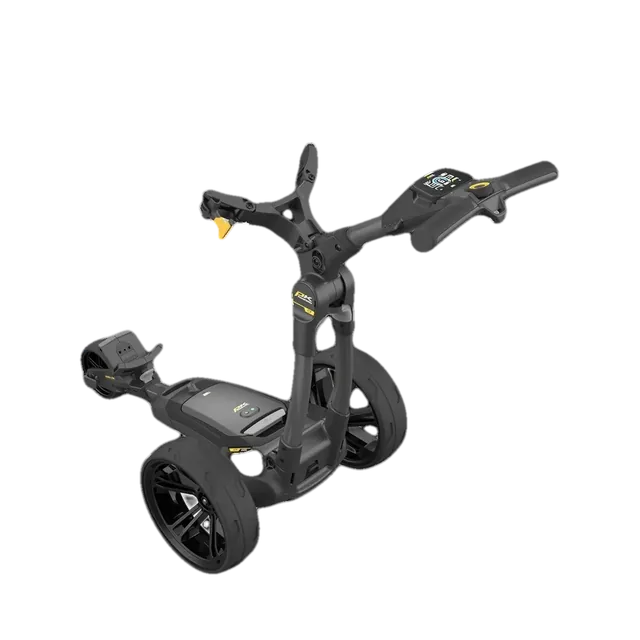
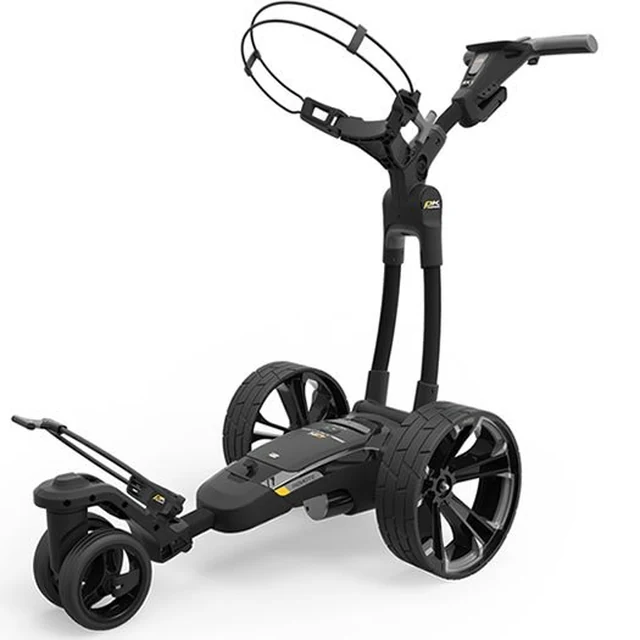
PowaKaddy RX12 GPS Remote
Our highest-scoring trolley, for golfers who will use both remote control and GPS every round. It is heavy and expensive, so only pay for it if both features matter to you.
The 5-inch portrait 720p touchscreen is the largest and sharpest GPS screen we list, with 40,000+ preloaded courses and no subscription, and it folds away to protect it in the car. Twin 230W motors with Slope Traverse Assist help it hold a line across hilly slopes.
It weighs 14 kg before the XL Plus lithium battery and folds long (805 × 425 × 345 mm), so check your boot and your back. PowaKaddy gives 2 years on the trolley and 5 years pro rata on the battery. RRP is; it has been available If you will not use the remote every round, the CT12 GPS has the same screen on a compact frame for less.
Choose this if: You want remote control and a big GPS screen in one trolley, and you play hilly courses.
Consider another option if: You usually walk beside your trolley, your boot is small, or you already have a GPS watch you like.
Reasons to consider
Largest, sharpest GPS screen we list
Remote control plus GPS, no subscription
5-year pro-rata battery warranty
Limitations to weigh up
Heavy at 14 kg without the battery
Long folded size
Premium price
Key specifications
GPS screen
5-inch portrait 720p HD touchscreen that folds away
Courses
40,000+ preloaded, no subscription
Motors
Twin 230W with Slope Traverse Assist
Battery
XL Plus 30V Plug ’n’ Play lithium
Folded size
805 × 425 × 345 mm
Weight
14.0 kg without battery
Remote range
Not published for the RX12 (PowaKaddy quotes up to 100 m for the RX10)
Warranty
2 years on the trolley; 5 years pro rata on the battery
regional terms
RRP (February 2025);
Manufacturer and retailer figures, checked September 2026.
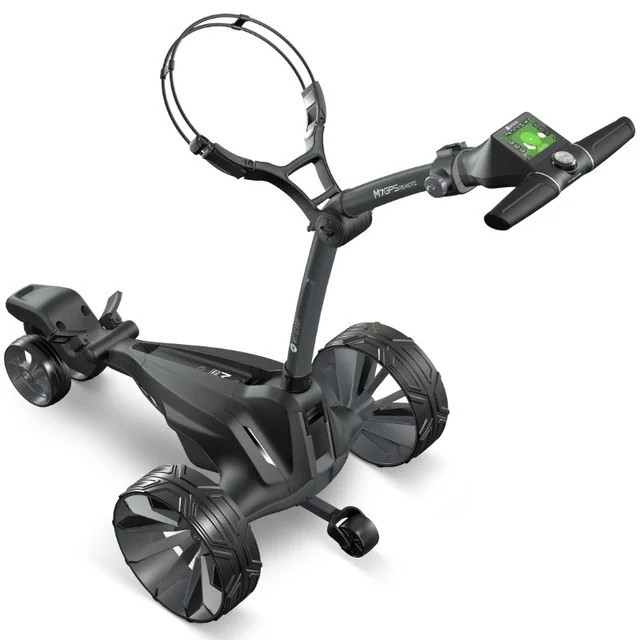
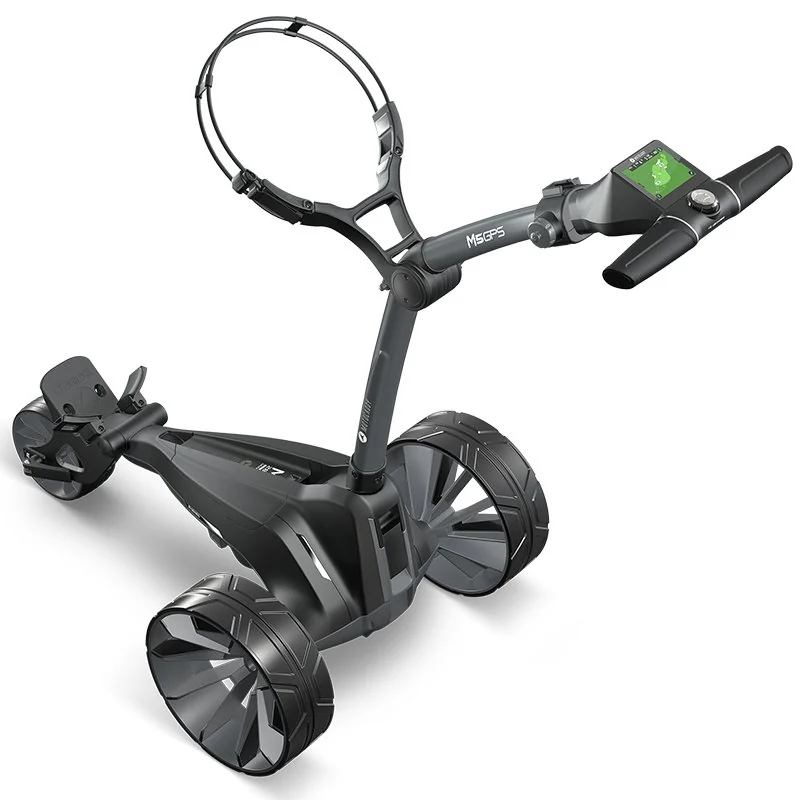
Remote control and GPS in a more compact package than the RX12, for less money. The 2026 update brings much better mapping and a new rechargeable remote.
The USB-C rechargeable remote works up to 100 m+ with 360° control. The 3.5-inch LCD touchscreen has full-hole mapping with a movable target and 3D flyovers across 40,000+ courses, and Adaptive Terrain Stability and automatic downhill control help on hills.
It uses Motocaddy’s cable-free Click ’n’ Connect Ultra lithium battery, folds to 650 × 470 × 420 mm and weighs 14.9 kg. Warranty is 2 years on the trolley and charger and 5 years on the battery. RRP is; it has been available
Choose this if: You want remote and GPS from Motocaddy, with a cable-free battery and a more compact fold than the RX12.
Consider another option if: You want the biggest GPS screen (the RX12), or you do not need GPS (the M7 Remote).
Reasons to consider
Remote and GPS in one
Improved 2026 mapping with 3D flyovers
Cable-free click-on battery
Limitations to weigh up
Heavy at 14.9 kg
Smaller screen than the RX12
Premium price
Key specifications
Remote
100 m+ range; USB-C rechargeable, 360° control
GPS screen
3.5-inch LCD touchscreen, 2D and 3D mapping
Courses
40,000+
Battery
Click ’n’ Connect Ultra lithium, cable-free
Folded size
650 × 470 × 420 mm
Weight
14.9 kg
Hills
Adaptive Terrain Stability, automatic downhill control
Warranty
2 years on the trolley and charger; 5 years on the battery
regional terms
RRP (March 2026);
Manufacturer and retailer figures, checked September 2026.
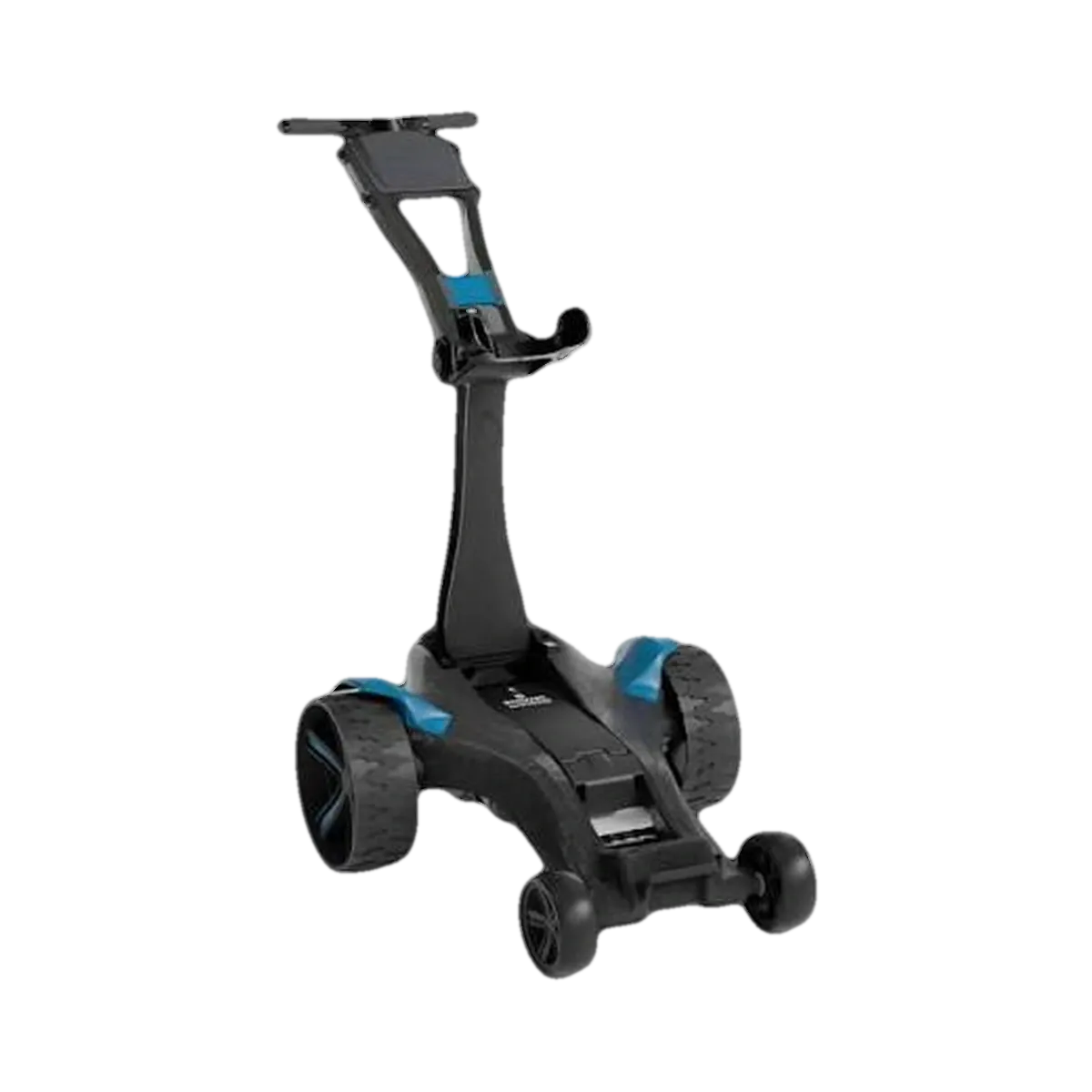
For golfers who really want to send their trolley ahead by remote. It is well built and controls its speed on hills, but it is heavy and priced at the top of the market.
The remote reaches up to 100 m, and two motors with terrain control hold speed on slopes, with three cruise speeds. It is not a follow trolley: you steer it by remote throughout. There is no screen on the trolley; battery level shows in the app.
Choose between a 230 Wh Base battery (2.5 kg) and a 307 Wh Max battery (3.0 kg), both rated for 2,000+ charge cycles. It folds to 540 × 600 × 320 mm and weighs 14.6 kg plus the battery. Stewart Golf offers a 2-year warranty and a 30-day trial, and prices it to depending on battery and finish.
Choose this if: You want genuine remote control on a hilly course and value premium build.
Consider another option if: You mainly walk beside your trolley (a push-button model is better value), or you want GPS on the handle.
Reasons to consider
Genuine remote control with a 100 m range
Two motors and terrain control on hills
30-day trial and 2-year warranty
Limitations to weigh up
Heavy to lift in and out of the car
Premium price
No GPS and no screen on the trolley
Key specifications
Remote range
Up to 100 m
Motors
Two, with terrain control; 3 cruise speeds
Battery
Lithium: Base 230 Wh (2.5 kg) or Max 307 Wh (3.0 kg); 2,000+ cycles
Folded size
540 mm high × 600 mm wide × 320 mm deep
Weight
14.6 kg plus battery
Features
App battery level, freewheel mode, quick-release wheels; no follow mode
Warranty and trial
2 years; 30-day trial from Stewart Golf
regional terms
to at Stewart Golf
Manufacturer and retailer figures, checked September 2026.
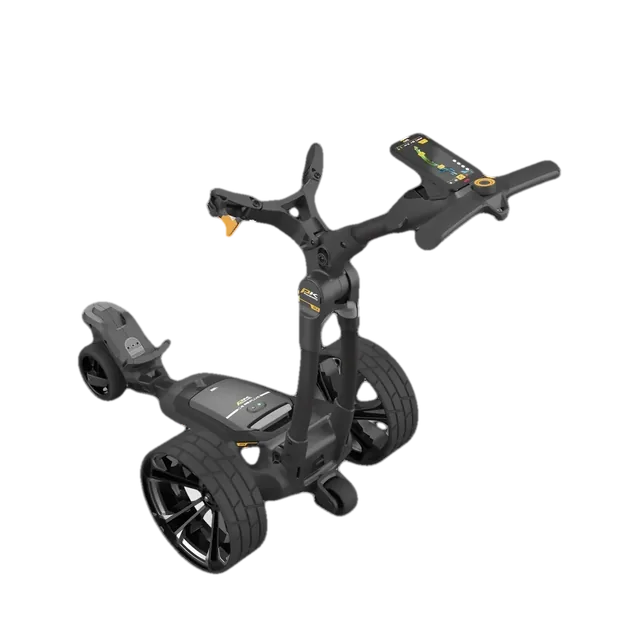
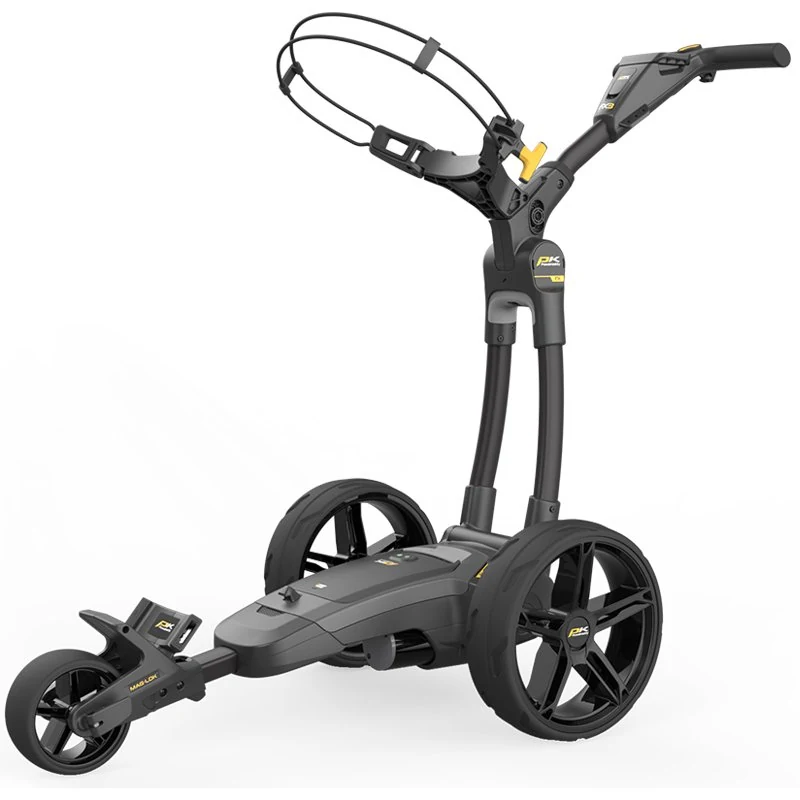
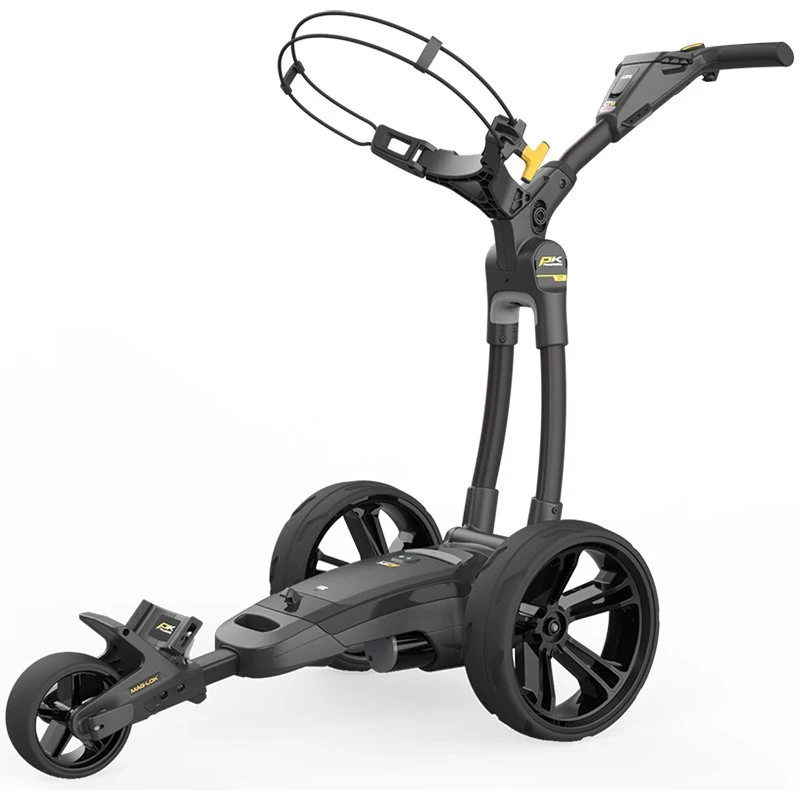
Our pick if boot space matters most. It folds smaller than most rivals, and you do not give up the everyday features you need.
It folds to 510 × 425 × 375 mm and weighs 9.9 kg without the battery, so it is easy to lift in and out every week. The 2.8-inch color screen shows a round timer, clock and automatic distance, and the tamper-proof dial sets the speed.
The 30V plug-in lithium battery comes in 18-hole and 36-hole versions. On hilly courses, choose the EBS version: its Electronic Braking System senses slopes and controls speed downhill. There is a USB-C charging port, and PowaKaddy gives 2 years on the trolley and 5 years pro rata on the battery.
Choose this if: Your car trunk is small or shared, and you want a light trolley that is easy to lift.
Consider another option if: You want remote control, built-in GPS (the CT6 GPS or CT12 GPS), or a cable-free battery (the Motocaddy M1).
Reasons to consider
One of the most compact folds available
Color screen with automatic distance
EBS option for hilly courses
Limitations to weigh up
No remote control or GPS
EBS version costs more
Plug-in rather than click-on battery
Key specifications
Folded size
510 × 425 × 375 mm
Weight
9.9 kg without battery
Battery
30V plug-in lithium; 18-hole and 36-hole options
Screen and controls
2.8-inch color screen, round timer, clock, automatic distance; tamper-proof dial
EBS version
Electronic Braking System controls speed downhill
Extras
USB-C charging port; left- or right-handed use
Warranty
2 years on the trolley; 5 years pro rata on the battery
regional terms
Manufacturer and retailer figures, checked September 2026.
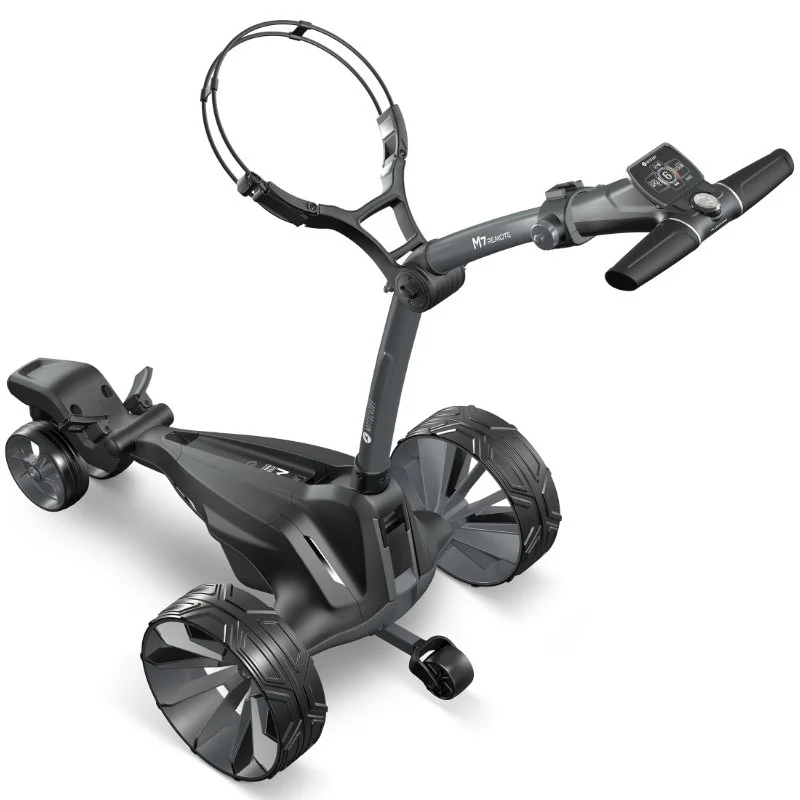
The sensible remote trolley if you already have a GPS watch or rangefinder. You get Motocaddy’s remote control and hill features without paying for a GPS screen.
The USB-C rechargeable remote reaches 100 m+ and drives forward, left, right and in reverse. Twin 230W motors with Downhill Control and Adaptive Terrain Stability handle hilly courses, and a 2.8-inch LCD shows 9 speeds, a clock, round timer and distances.
It uses the cable-free Ultra lithium battery, weighs 14.4 kg and folds to about 650 × 470–515 × 420 mm (sources differ on the width). Warranty is 2 years on the trolley and charger and 5 years on the battery. RRP is; it has been available
Choose this if: You want remote control but already have GPS on your wrist or in your bag.
Consider another option if: You usually walk beside your trolley, or you want GPS on the handle (the M7 GPS Remote).
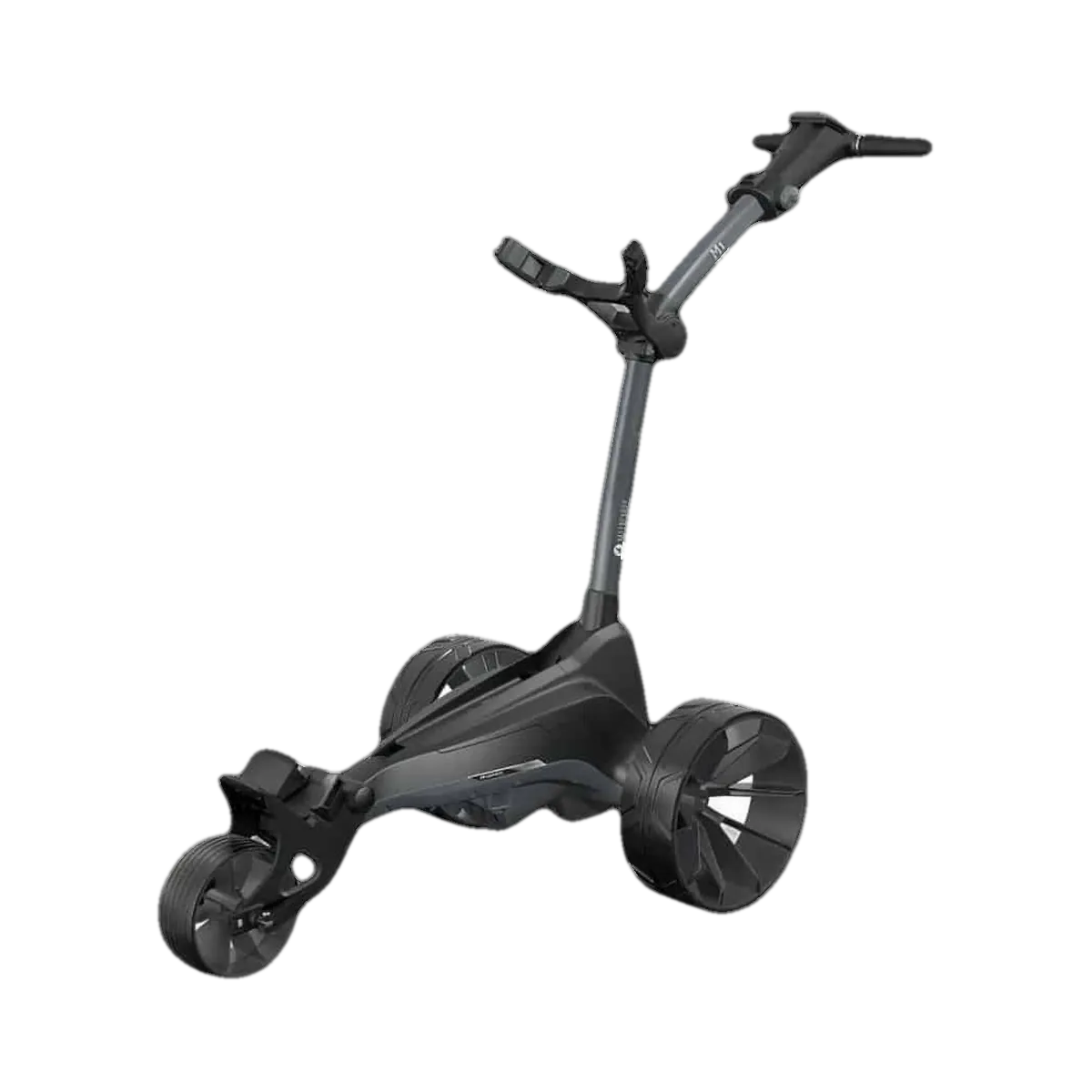
The trolley to buy if you just want help walking 18 holes. It is simple from the first round and costs far less than GPS or remote models.
The click-on lithium battery has no cable to plug in, and the 2.8-inch color LCD is easy to read. Nine speed settings, pause and resume, and distance control that sends the trolley up to 45 yards ahead and stops cover everything most golfers need.
It folds to 650 × 470 × 410 mm and weighs about 10 kg (Motocaddy quotes 9.9 kg; one retailer lists 10.6 kg). A USB charging port, electronic parking brake and 4-digit PIN lock are included, with 2 years on the trolley and charger and 5 years on the battery. It has been available
Choose this if: You want simple, dependable powered walking with a cable-free battery.
Consider another option if: Your car trunk is very small (the CT6), or you want GPS (the M5 GPS) or remote control.
Reasons to consider
Cable-free click-on lithium battery
Distance control and PIN lock included
5-year battery warranty
Limitations to weigh up
Not the most compact fold
No GPS or remote control
Weight figures vary between sources
Key specifications
Folded size
650 × 470 × 410 mm
Weight
About 10 kg (9.9 kg Motocaddy; 10.6 kg one retailer)
Battery
Click-on lithium, no cable; 18-hole and 36-hole versions
Screen
2.8-inch color LCD
Controls
9 speeds, distance control up to 45 yards, pause and resume
Extras
USB charging port, electronic parking brake, 4-digit PIN lock
Warranty
2 years on the trolley and charger; 5 years on the battery
regional terms
Manufacturer and retailer figures, checked September 2026.
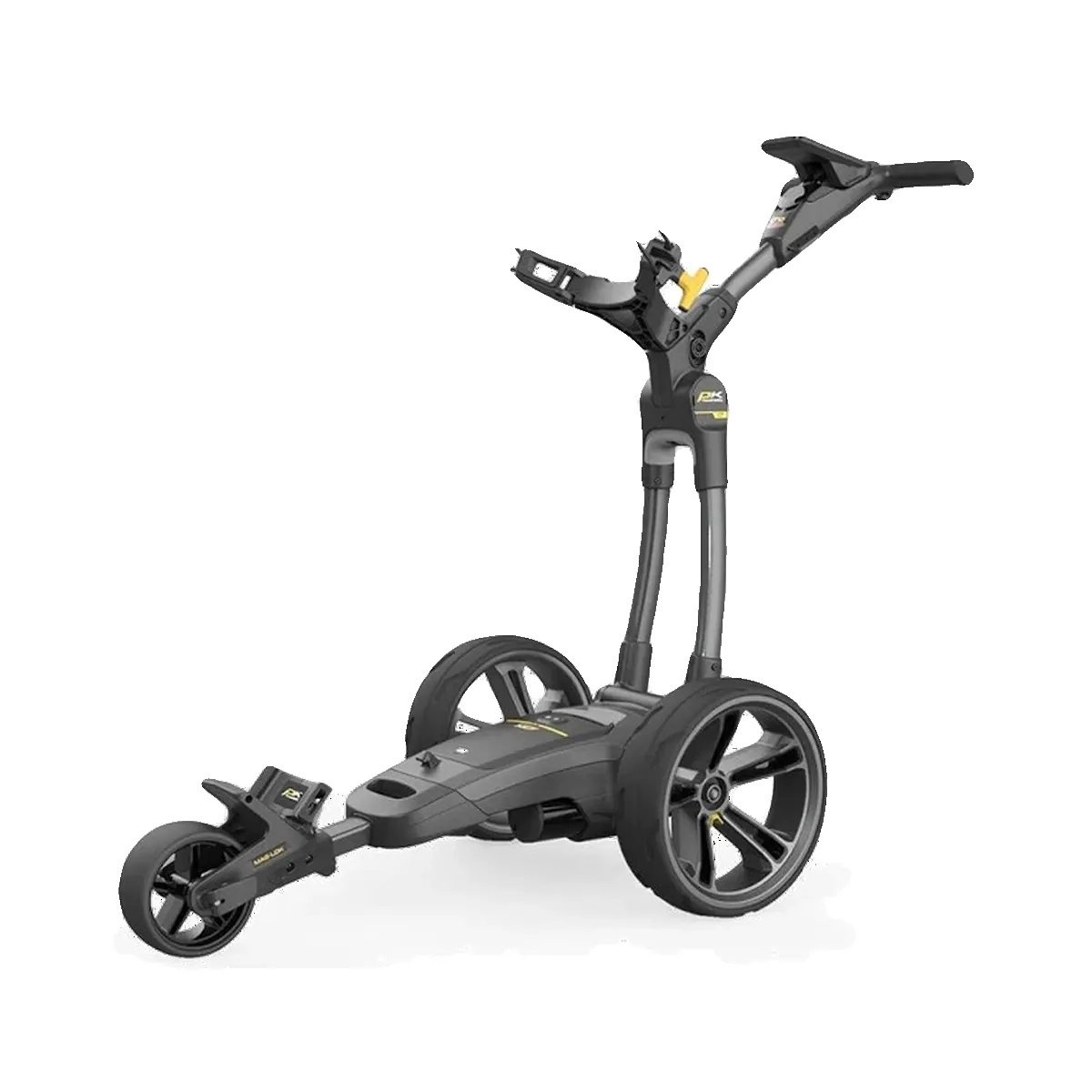
A simple, well-priced trolley with a color screen and the option of electronic braking. It scores the same as the M1.
The anti-tamper dial sets the speed, and a 2.3-inch full-color widescreen shows speed and battery level. The optional EBS (Electronic Braking System) controls the trolley’s speed on steep downhill slopes, so choose that version for a hilly course.
Batteries come in Standard (18 holes), Extended (36 holes) and XL Plus sizes. It weighs 9.6 kg without the battery but folds long, to 805 × 560 × 346 mm, so measure your boot. PowaKaddy gives 2 years on the trolley and 5 years pro rata on the battery. RRP is or; it has been available
Choose this if: You want a low-cost trolley with a screen, and a longer boot is not a problem.
Consider another option if: You need a compact fold (the CT6), a cable-free battery and distance control (the M1), or GPS.
Reasons to consider
Color screen at a low price
EBS option for hills
Simple anti-tamper dial
Limitations to weigh up
Long folded length
Small screen with basic information
No GPS or distance control
Key specifications
Screen
2.3-inch full-color widescreen: speed and battery
Controls
Anti-tamper dial
EBS
Optional Electronic Braking System
Battery
Standard (18 holes), Extended (36 holes) or XL Plus
Folded size
805 × 560 × 346 mm
Weight
9.6 kg without battery
Warranty
2 years on the trolley; 5 years pro rata on the battery
regional terms
RRP /;
Manufacturer and retailer figures, checked September 2026.
Also Evidence-led assessment: the PowaKaddy FX1, the lowest-cost trolley from a major brand, and the PowaKaddy FX5. For the Motocaddy 2026 line-up, see our range watch.
Picks by budget
Compare features and ownership requirements. Confirm the exact US model, battery option and current software terms separately.
Folded size matters more than most features. A compact trolley you are happy to load every week beats a bigger one you dread lifting.
Do you need remote control?
Remote lets you send the trolley ahead while you walk a different line. If you usually walk beside it, save several hundred pounds and about 4–5 kg.
Is built-in GPS worth it?
GPS on the handle can replace a watch or handheld. It is convenient, but it will not give better yardages than a good GPS watch you already own.
Size, weight and warranty
Folded size and weight decide whether you enjoy using a trolley every week. Sizes are length × width × height in mm unless stated. *PowaKaddy and Stewart quote weight without the battery.
Trolley
Folded size (mm)
Weight
Screen, GPS and control
Warranty (trolley; battery)
PowaKaddy RX12 GPS Remote
805 × 425 × 345
14.0 kg*
Remote; 5-inch GPS; Slope Traverse Assist
2 yr trolley; 5 yr pro rata
Motocaddy M7 GPS Remote (2026)
650 × 470 × 420
14.9 kg
Remote; 3.5-inch GPS; downhill control
2 yr trolley; 5 yr
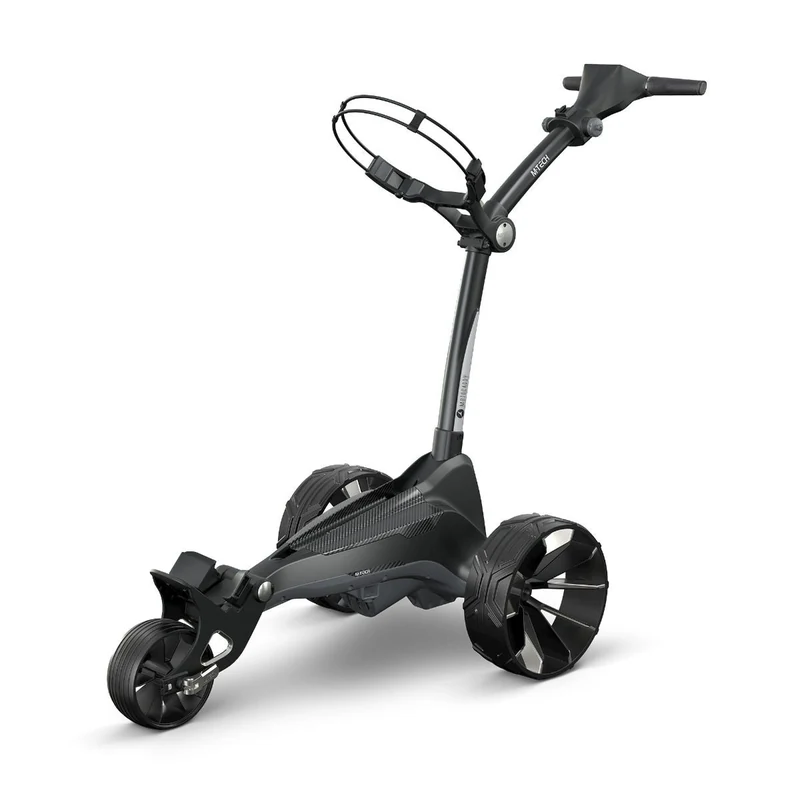
Motocaddy M-TECH GPS
650 × 470 × 410
11.8 kg
3.5-inch GPS; distance control to 60 yd; downhill control
3 yr trolley; 5 yr
Stewart Vertx Remote
540 × 600 × 320 (H × W × D)
14.6 kg*
Remote; terrain control; no screen
2 yr; 30-day trial
PowaKaddy CT6
510 × 425 × 375
9.9 kg*
2.8-inch color screen; EBS option
2 yr trolley; 5 yr pro rata
PowaKaddy CT6 GPS
510 × 425 × 375
9.9 kg*
2.8-inch GPS; EBS option
2 yr trolley; 5 yr pro rata
Motocaddy M7 Remote (2026)
650 × 470–515 × 420
14.4 kg
Remote; 2.8-inch screen; downhill control
2 yr trolley; 5 yr
PowaKaddy RX Remote
805 × 425 × 345
14.0 kg*
Remote; dial and LED, no screen
2 yr trolley; 5 yr pro rata
Motocaddy M1
650 × 470 × 410
About 10 kg
2.8-inch screen; distance control to 45 yd
2 yr trolley; 5 yr
Motocaddy M5 GPS
650 × 470 × 410
10.5 kg (DHC 11.2 kg)
3.5-inch GPS; distance control to 60 yd; DHC option
The PowaKaddy RX12 GPS Remote is our highest-scoring trolley (95/100) for golfers who want both remote control and GPS. For most golfers, the compact PowaKaddy CT6 or the simple Motocaddy M1, both are better value.
Why is the Motocaddy M1 the simple pick when the PowaKaddy FX3 is cheaper?
Both score 91/100. The FX3 has a lower, but the M1 adds a cable-free click-on battery, distance control, a PIN lock and a shorter fold. If price matters most and your boot is long enough, the FX3 is a good buy.
Is a remote golf trolley worth it?
Yes, if you regularly want the trolley to travel separately from you, for example sending it towards the next tee. If you normally walk beside it, remote control adds cost and 4–5 kg of weight without solving a problem.
What is the cheapest good electric trolley?
Among the trolleys we have scored, the PowaKaddy FX3 (91/100) is the cheapest The PowaKaddy FX1 is cheaper still; see its product page for our evidence-led assessment.
Which electric trolley folds smallest?
The PowaKaddy CT range: the CT6, CT6 GPS and CT12 GPS all fold to 510 × 425 × 375 mm and weigh 9.9 kg without the battery. Motocaddy’s M1, M5 GPS and M-TECH fold to 650 × 470 × 410 mm.
Motocaddy or PowaKaddy?
Both make excellent trolleys at every level. Motocaddy’s click-on batteries have no cable; PowaKaddy’s CT range folds smaller. Compare the exact models on folded size, battery and warranty. See our brand comparison.
Before you spend more
Battery and ownership costs deserve equal attention
Check the quoted battery range, warranty terms, replacement-battery cost and how practical the charger is. Those details are less exciting than a touchscreen or remote, but they decide how dependable and economical the trolley feels after several seasons.
Integrated GPS is about convenience, not better yardages
A GPS trolley can reduce the number of devices you carry, but compare its screen and course information with the watch, handheld or phone you would otherwise use. If you already like that setup, paying again for trolley GPS may add little.
Battery, travel and ownership questions
Can I take a lithium trolley battery on a plane?
Usually not. IATA guidance allows spare lithium batteries up to 100 Wh in hand luggage, 100–160 Wh only with airline approval, and generally forbids anything over 160 Wh on passenger aircraft. Trolley batteries are bigger: for example PowaKaddy’s 18-hole battery is 220 Wh and its 36-hole XL is 260 Wh. Hire a trolley at the destination instead, and check with your airline.
How much is a replacement battery?
As an example, PowaKaddy’s Plug ’n’ Play lithium batteries list (18-hole) and (36-hole XL), and retailers often sell them for less. Most lithium batteries we list have a 5-year (often pro-rata) warranty, so check the warranty before paying.
Who services or repairs an electric trolley?
Start with the retailer you bought it from, then the maker’s support team; PowaKaddy and Motocaddy both handle warranty repairs. Many independent golf shops also service trolleys. Keep your receipt for the 2-year trolley and battery warranties shown in the spec table.
Should I buy a used trolley?
It can save money, but the battery is the expensive part. Ask the battery’s age and how many holes it still lasts, check the wheels and fold, and remember the warranty may not transfer. A new entry trolley such as the PowaKaddy FX1 comes with full warranties. FX1 prices →
Which trolley is lightest to lift?
See weight and folded size in the spec table. Push-button trolleys weigh about 9.5–10 kg without the battery; remote trolleys about 14–15 kg. The PowaKaddy CT6 folds smallest. Lift the battery out first to make the trolley lighter.
Do I need downhill braking for a hilly course?
If your course has steep downhill slopes, yes. Downhill braking holds the trolley at a steady speed, so you aren’t pulled down the hill. Motocaddy calls it DHC and PowaKaddy calls it EBS. It is standard on the Motocaddy M7 Remote, M7 GPS Remote and M-Tech, and on the Stewart Vertx Remote. For the PowaKaddy CT6, CT6 GPS, CT12 GPS and FX3 and the Motocaddy M1 and M5 GPS, buy the separate EBS or DHC version, which costs more. See the Downhill braking column in the spec table.
Should I buy the 18-hole or 36-hole battery?
Buy the 36-hole battery if you play 36 holes in a day, walk a hilly course, play through the winter (cold shortens range) or plan to keep the battery for years, because capacity falls with age. It costs more on most trolley bundles and is a little heavier. PowaKaddy’s 36-hole battery is 1.85 kg against 1.56 kg for the 18-hole; Motocaddy’s is 2.2 kg against 1.85 kg. For one round on a flat course, the 18-hole battery is enough.
Will it fit in a small car trunk?
Measure your boot floor (depth and width) and the height of the boot opening, then compare with the Folded size column in the spec table. The PowaKaddy CT6 folds smallest, to 510 × 425 × 375 mm. The Motocaddy M1 and M5 GPS fold to 650 × 470 × 410 mm, and the PowaKaddy FX1 is long when folded (805 mm). In a small hatchback, take the battery out and remove the wheels to make it smaller and lighter to lift. CT6 prices →
Can I pay monthly?
Electric trolley terms explained
Push-button trolley
A powered trolley you walk beside, setting the speed with a dial or buttons. No remote control.
Remote control
A handset that steers the trolley from up to about 100 m away, so it can go ahead while you walk your own line.
Distance control
Sends the trolley a set distance ahead (up to 45–60 yards on Motocaddy models) and stops it.
EBS / downhill control
Electronic braking that senses a slope and holds the trolley’s speed going downhill. Worth having on hilly courses.
Click-on (cable-free) battery
Motocaddy batteries that connect as you drop them in, with no cable to plug in or trip over.
18-hole vs 36-hole battery
Battery size. A 36-hole (Extended or Ultra) battery covers long, hilly rounds and two rounds between charges.
Pro-rata battery warranty
Cover that reduces over time: in later years you pay part of the cost of a replacement.
Folded size
The size of the trolley folded for the car. Measure your boot, with the bag and shoes that go in with it.
Anti-tamper dial
A speed dial that cannot be knocked or changed accidentally while the trolley is parked.
Handle GPS
A GPS screen on the trolley handle with course maps and distances, replacing a watch or handheld.
How we choose
Every trolley gets a GGL Score out of 100, weighted towards what matters when you are deciding whether to buy. We then compare it with the alternatives at the same price.
Factor
Weight
What we look at for electric trolleys
Performance
30%
Motor, hill handling (EBS or downhill control), stability and remote range
Value for money
25%
Price against trolleys with the same features, including the battery you need
Ease of use
15%
Folding, weight, battery fitting and controls
Features
15%
GPS, remote, distance control, screens and charging ports
Reliability
10%
Build, trolley and battery warranties
95–100: exceptional; 90–94: excellent; 85–89: strong choices with clearer compromises; 80–84: basic or specialist options. Our research-based score weighs features, usability, ownership costs and value. Read each review for the reasons behind the rating.